
Mitochondrial Magic: How to Reignite Your Energy from the Inside Out
If you’ve ever felt like your energy just isn’t what it used to be — that slow, dragging fatigue that coffee doesn’t quite fix — you’re not imagining it. Much of our vitality depends on something microscopic yet mighty: the mitochondria.
Strength Is Your Retirement Plan: Why Seniors Must Prioritize Resistance Training
Muscle is more than just tissue that moves our bodies—it is a critical organ of longevity. Yet beginning as early as our 30s, most adults start to lose muscle mass and strength in a process called age-related sarcopenia. Without intervention, this gradual decline accelerates with each passing decade, quietly eroding independence and health.
5 Simple Exercises to Improve Balance and Prevent Falls at Home
One of the biggest fears for older adults—and their families—is the risk of falling. In fact, falls are the leading cause of injury among seniors. The good news? Many falls can be prevented with a few minutes of gentle, consistent exercise each day. By improving balance, strength, and mobility, seniors can feel more confident moving around their homes and enjoy greater independence.
Nutrition for Seniors: Simple, Personal, and Foundational
When it comes to nutrition, there is no single “perfect” diet that works for every person. Each of us has a unique biochemistry, lifestyle, and set of needs, which means the best way of eating is the one that supports your body’s health, keeps you nourished, and is sustainable for the long term. That said, nutrition at its core is beautifully simple.
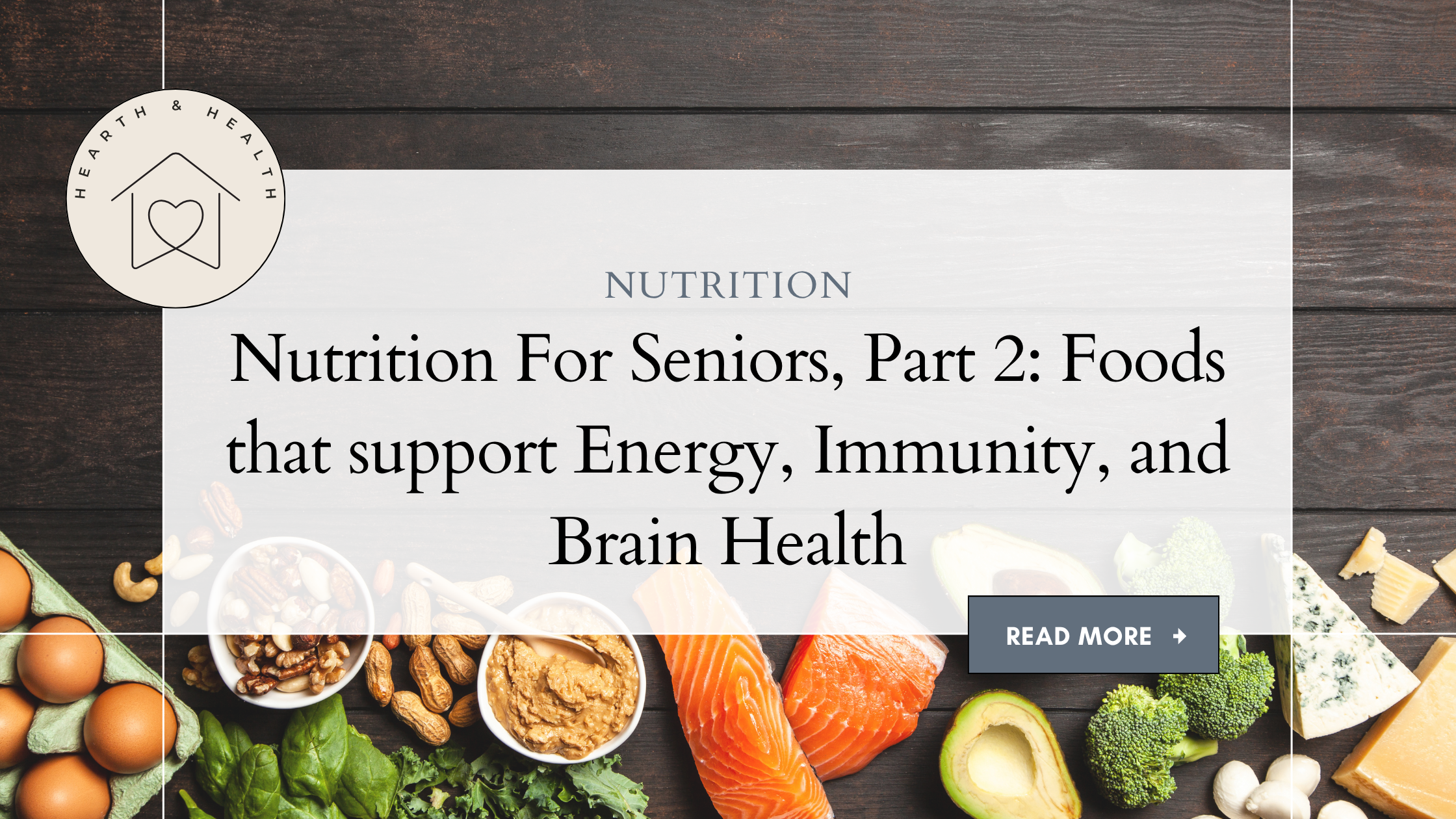
Nutrition For Seniors, Part 2: Foods that support Energy, Immunity, and Brain Health
“You are what you eat” is an old saying, but for seniors, it couldn’t be more true. The foods we choose each day have a powerful impact on energy levels, memory, mood, and the ability to stay independent at home. Good nutrition doesn’t just keep us going — it helps us thrive.
Emotional Health: The Other Half of Wellness
When most people think about health, they focus on the physical—exercise, diet, sleep, and doctor’s visits. Yet emotional health is every bit as important, especially as we age. In fact, research shows that living alone or feeling lonely can significantly increase the risk of early death, rivaling other well-known risk factors like smoking or obesity.
Aging at Home With Joy: 7 Daily Habits That Boost Mood and Independence
Aging brings wisdom, perspective, and resilience — but it can also bring challenges. Many seniors worry about losing their independence, slowing down physically, or feeling isolated. The truth is, while aging is inevitable, how we age makes all the difference.
Breathe Your Way to Better Health and Strength
Breathing is something we do all day, every day—yet most of us rarely give it a second thought. For seniors, learning to breathe well is more than just a relaxation technique. Proper breathing supports the body on multiple levels, influencing everything from stress management and digestion to movement, stability, and strength.
The Mitochondria–Metabolism Connection: Why Zone 2 Exercise is a Game-Changer as We Age
Aging is often described as a slow decline in energy, strength, and vitality. One of the root causes of this decline lies deep inside our cells: the gradual loss of mitochondria—the tiny power plants that produce the energy every tissue in the body relies on. The good news? The right kind of exercise can slow, even reverse, this process.
Understanding Aging: Protecting Your Cells for a Healthier Life
Aging is something we all experience, but the process starts far below the surface—right at the level of our cells. Our bodies are made of trillions of cells, and each one has a natural limit to how many times it can divide. This concept is known as the Hayflick Limit, named after the scientist who discovered it. Essentially, every time a cell divides, it loses a little bit of its ability to divide again. Over time, this contributes to the signs of aging we see in the body.